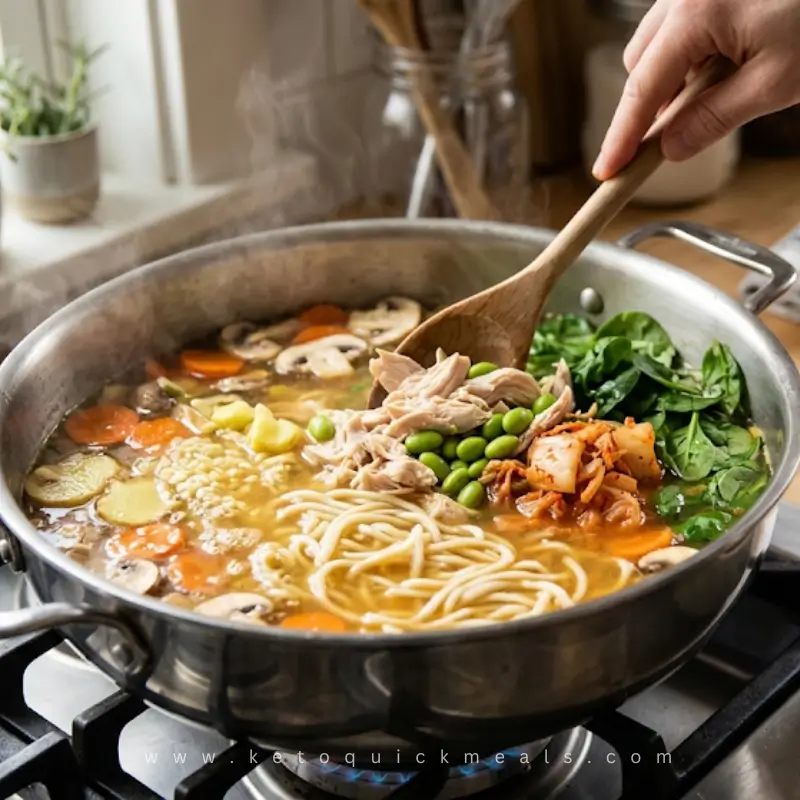
A warm bowl of miso chicken noodle soup gets a flavorful upgrade with spicy kimchi, tender chicken, vegetables, and protein-rich edamame. It’s comforting, satisfying, and packed with around 40g of protein per serving—perfect for an easy lunch or cozy weeknight dinner.
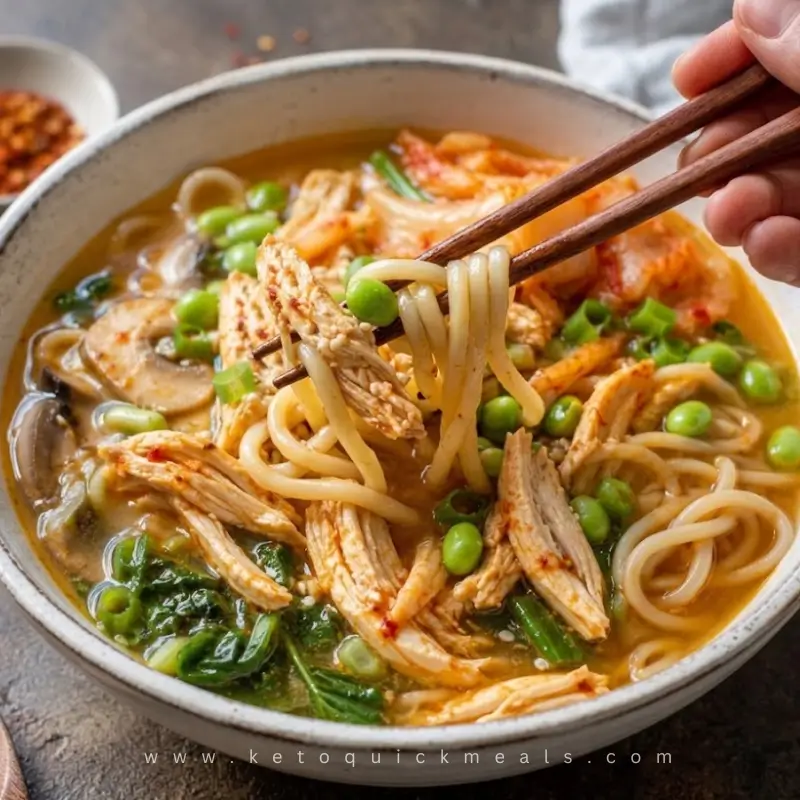
There’s something so comforting about a warm bowl of noodle soup, especially when I want something cozy but still filling and nourishing. I love adding kimchi and miso to this soup because they give the broth so much flavor without needing a long list of ingredients.
I also wanted this version to be higher in protein, so I load it up with tender chicken and edamame, along with plenty of vegetables. The result is a hearty bowl with that perfect mix of savory, slightly spicy, and comforting flavors.
This has quickly become one of those recipes I make when I want something simple, satisfying, and full of flavor without spending hours in the kitchen.
Affiliate Disclosure: Some of the links on this site are affiliate links, which means I may earn a small commission if you make a purchase through them, at no extra cost to you. I only recommend products I genuinely believe may be useful for my readers
Equipment
- Large soup pot or Dutch oven
- Wooden spoon or ladle
- Cutting board
- Chef’s knife
- Small mixing bowl — for dissolving the miso
- Measuring cups and spoons
- Tongs or two forks — for shredding the chicken
- Soup bowls
- Chopsticks and soup spoons, for serving 🥢🍜
How to Make It Even Higher in Protein
Want to push the protein even higher? Use 2 lb (900g) chicken breast. You can also add extra edamame for a more filling bowl.
Why You’ll Love This Soup
- 💪 High in protein from chicken and edamame
- 🥬 Loaded with vegetables and leafy greens
- 🍜 Comforting without being overly heavy
- 🌶️ Kimchi adds a delicious spicy, tangy kick
- 🥢 Miso and ginger create deep savory flavor
- ⏱️ Easy enough for a weeknight meal
Try My Other Recipes
Delicious Air Fryer Cheesy Chicken Skewers –
Homemade Healthy Pumpkin Seed Crackers –
Easy Creamy Garlic Chicken & Mushroom Bake ( Low Carb, Family Favorite) –
Charred Cauliflower Steaks with Lemon-Turmeric Tahini –
Pineapple Ginger Smoothie (Naturally Rich in Bromelain) –
Also Check these, can be useful for daily cooking 12 Best Budget-Friendly Kitchen Gadgets Worth Having –
Miso Chicken Noodle Soup Recipe Tips
Use low-sodium broth: Miso, kimchi, and soy sauce can all contain quite a bit of sodium, so starting with low-sodium broth gives you better control.
Don’t overcook the chicken: Simmer it gently and remove it as soon as it’s cooked through so it stays tender.
Adjust the spice: Use mild kimchi for a gentler soup or add chili flakes for more heat.
Use shirataki noodles: Rinse shirataki noodles well and add them near the end of cooking so they stay springy and absorb the miso broth.
Make it gluten-free: Shirataki noodles are naturally gluten-free; just make sure your miso and soy sauce are certified gluten-free.
The full measurements and method are in the recipe card below.
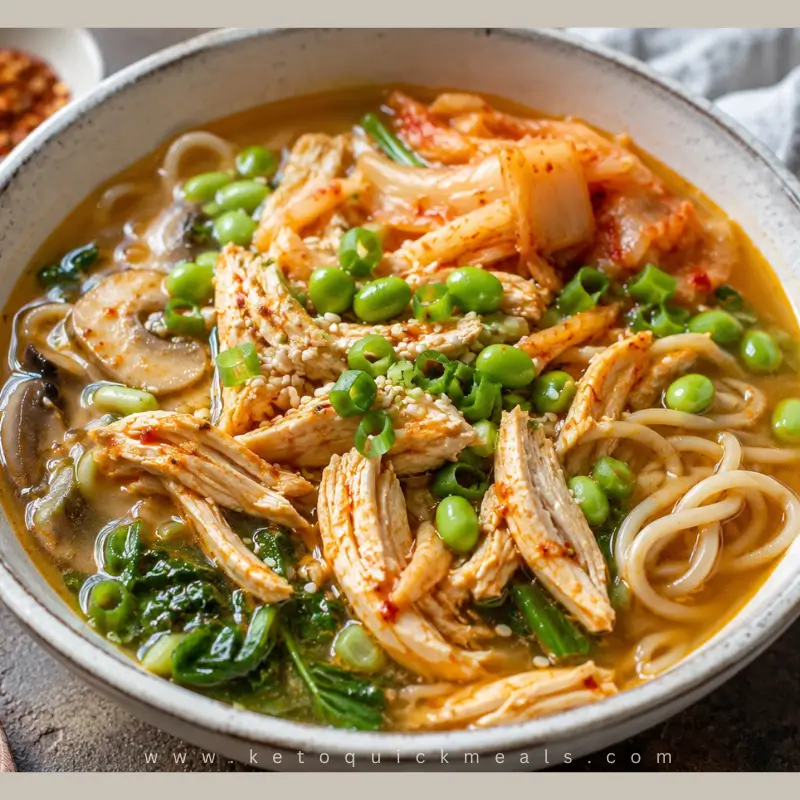
Miso Chicken Noodle Soup with Kimchi
Ingredients
Method
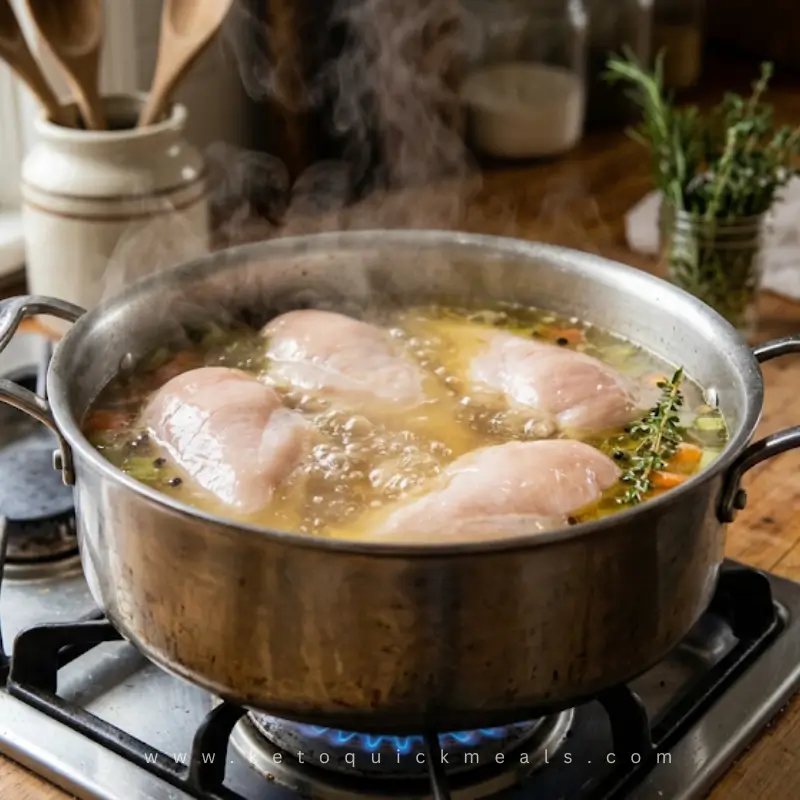
- Place the chicken breasts in a pot with the chicken broth and bring to a gentle boil. Reduce the heat and simmer for about 20 minutes, or until the chicken is fully cooked.
- Add garlic, ginger, carrots, and mushrooms to the broth. Simmer for about 5 minutes, until the vegetables begin to soften.
- Rinse the shirataki noodles well under cold water and drain. Add them to the soup near the end and simmer for 2–3 minutes to warm through.
- Stir in the shredded chicken, edamame, spinach, and kimchi. Simmer for 2–3 minutes, until the spinach wilts.
- Turn the heat to low. Mix the miso paste with a little hot broth in a small bowl until smooth, then stir it back into the soup. Add soy sauce and sesame oil.
- Avoid boiling the soup after adding the miso. Gentle heat helps preserve its delicate flavor.
- Ladle into bowls and top with green onions, sesame seeds, extra kimchi, and chili flakes if desired.
Notes
Frequently Asked Questions About Miso Chicken Noodle Soup
Can I use chicken thighs?
Yes. Chicken thighs will give the soup a richer flavor, although chicken breast keeps the recipe leaner and higher in protein per calorie.
Can I use leftover chicken?
Absolutely. Add cooked shredded chicken toward the end and simmer just long enough to warm it through.
Can I make this soup ahead of time?Yes. Store the soup in an airtight container in the refrigerator for up to 3 days. For the best texture, rinse and store the shirataki noodles separately and add them when reheating.
Is this soup spicy?
It depends on your kimchi. Choose mild kimchi for less heat or add chili flakes for extra spice.
Can I freeze it?The broth and chicken freeze well, but shirataki noodles can become soft after freezing. For best results, freeze the soup without the shirataki noodles and add freshly rinsed shirataki noodles when reheating.
Can I add more vegetables?
Definitely. Bok choy, cabbage, zucchini, bell peppers, and mushrooms all work well.
Final Thoughts 🍜
This Miso Chicken Noodle Soup is one of those recipes I love making when I’m craving something warm, comforting, and satisfying without making dinner complicated. The tender chicken, flavorful miso broth, spicy kimchi, and noodles come together in such a delicious way—and the extra protein makes it a meal that keeps you feeling full.
I hope you enjoy this cozy bowl as much as I do! If you make it, save this recipe, share it with a fellow soup lover, and explore more easy, delicious recipes on ketoquickmeals.com
Now I want to know—are you a little-kimchi person or do you like your soup extra spicy?

Hi, I’m Momina, the creator of ketoquickmeals.com,I’m passionate about cooking, food, and nutrition. As a nutrition and dietetics student, I enjoy exploring ingredients, learning about balanced eating, and sharing simple, delicious recipes for everyday life.
At KetoQuickMeals, you’ll find easy low-carb, high-protein, Mediterranean-inspired, air-fryer, and wholesome homemade recipes, along with helpful cooking tips.
Thank you for being part of the KETOQUICKMEALS community!
DisclaimerThe content on this website is for informational and educational purposes only. It is based on personal experience and food-related research and is not a substitute for professional medical or dietary advice. Always consult a qualified healthcare professional before making significant dietary changes.